
Best AI Meeting Assistants for Sales Teams: Top Tools that Automate CRM Updates in 2026
Sales meetings generate more insight than most teams ever use. A rep hears a buyer’s real objection, jots half a note, and by Friday the detail is gone. Meanwhile, the CRM sits untouched until someone remembers to update it, usually days later and from memory.
That gap costs more than it looks like on paper. Sales reps spend only 28-30% of their time actually selling, according to Salesforce’s State of Sales 2025 report, with the rest consumed by admin tasks, data entry, and internal meetings.
The conversation intelligence software market is projected to grow from $28.54 billion in 2025 to $32.25 billion in 2026, a 13% CAGR expected to reach $52.03 billion by 2030, according to The Business Research Company’s 2026 market report. Managers who own pipeline hygiene for their teams are under real pressure to close that gap.
This list ranks the strongest options for sales teams specifically, not general-purpose meeting recorders. Each entry includes a screenshot and is scored across the full meeting lifecycle: preparing before the call, coaching during it, and automating CRM work after it ends.
What to Look for in an AI Meeting Assistant for Sales Teams
Not every conversation intelligence tool covers the same ground, and the differences matter more than the marketing pages suggest. Before you commit budget, weigh these four factors.
- Pre-meeting prep. Some tools only start working once the call begins. Others pull account history, prior notes, and calendar context into a briefing before the rep even joins.
- Live coaching. Real-time talk-time tracking, competitor mention alerts, and objection-handling prompts help newer reps close gaps a post-call scorecard can’t fix after the fact.
- CRM automation depth. This is where teams see the biggest time savings. AI-powered speech analytics adoption has grown by 48%, and cloud-based deployment has grown by 44%, according to a 2026 SNS Insider market report on the conversation intelligence category, largely because teams want automated data capture rather than a transcript they still have to summarize themselves.
- Salesforce-native vs. bolt-on, and pricing. A tool that lives inside Salesforce updates records the moment a call ends; one that sits outside it requires a Zapier workflow or a manual copy-paste step reps will eventually skip. Enterprise-grade analytics platforms often start north of $1,000 per user annually, so growing teams need to know whether that value shows up at the base price or only once you’ve bought add-ons.
1. Cirrus Insight: Revenue Workspace that Prepares, Coaches, and Executes in Salesforce
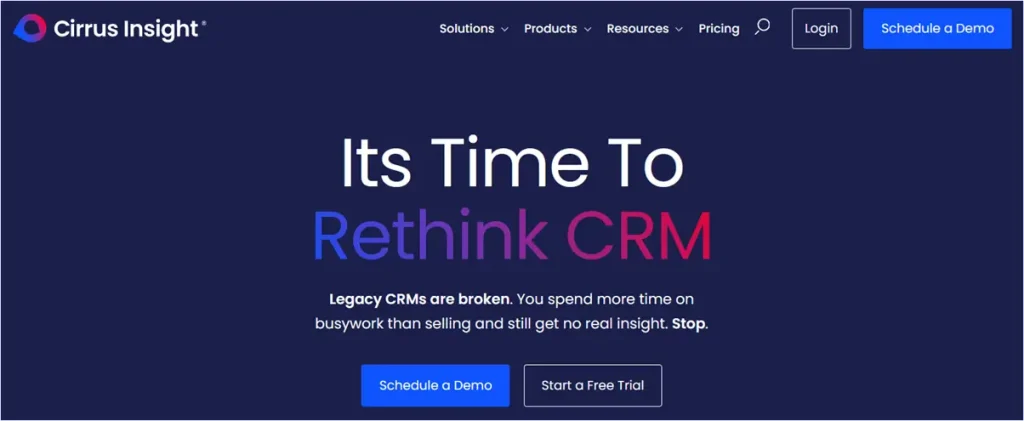
Cirrus Insight is built around a simple idea: conversation intelligence should do more than record and summarize a call. It should prepare a rep before the meeting, coach them during it, and then push the outcome straight into Salesforce without anyone touching a keyboard afterward. That before-, during-, and after-framing is what separates it from the tools further down this list, most of which stop at post-call analytics.
Before a project meeting, Cirrus Insight pulls prior conversation history, open opportunities, and account context into a briefing that sits right in the rep’s calendar and email, the tools they’re already using every day. During the call, it offers live coaching cues rather than a scorecard that only arrives afterward. After the call, it automates the CRM update itself, logging notes, updating opportunity stages, and queuing follow-ups directly in Salesforce.
That last piece addresses one of the more stubborn problems in sales operations. Roughly 79% of opportunity-related data gathered by reps is never entered into the CRM at all, and manual data-entry errors cost companies an average of 15% in lost revenue, based on CRM adoption research Cirrus Insight compiled in its own 2025 sales automation statistics.
Automating that entry can cut the time reps spend on manual updates by up to 70%, with teams reporting they save 2-3 hours per rep daily once the workflow is in place. For managers trying to keep pipeline data trustworthy without adding headcount to RevOps, that’s a direct, measurable win rather than a promised one.
2. Gong: Deep Post-Call Analytics for Enterprise Revenue Teams
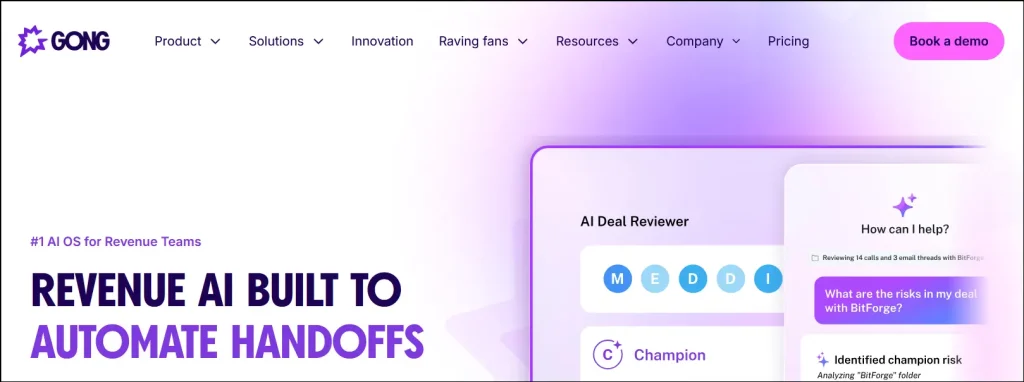
Gong is the category’s best-known name, and for good reason. Its call library, deal scorecards, and forecasting models give enterprise revenue leaders a genuinely deep view into what’s happening across hundreds of reps at once.
The tradeoff is focus and cost. Gong is built around post-call review rather than pre-meeting prep, so the value shows up after the conversation.
Pricing typically runs $1,200 to $1,600 per user annually, and getting full value usually requires a dedicated RevOps function to manage the platform.
That’s a real commitment for a mid-market team that wants CRM updates handled automatically.
3. Avoma: Mid-Market Meeting Lifecycle Automation
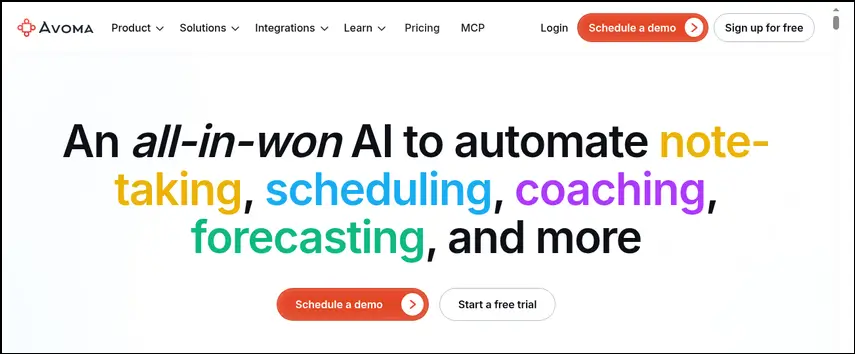
Avoma positions itself as a full meeting lifecycle tool rather than a pure call recorder, covering scheduling, note-taking, and CRM updates in one workflow.
It’s a solid fit for SMB and mid-market sales teams that want lifecycle coverage without an enterprise price tag. In April 2026, Avoma rolled out Smarter Forecast Submissions. This feature uses call data to flag forecast risk before a deal slips, which is a useful signal for teams managing a leaner pipeline.
Where it falls short of the top pick is depth of Salesforce-native execution. Avoma integrates well, but the CRM automation still functions more like a sync than a built-in workflow, so some manual review tends to creep back in for complex deals.
4. Chorus by ZoomInfo: Call Recording and Coaching Inside the ZoomInfo Suite
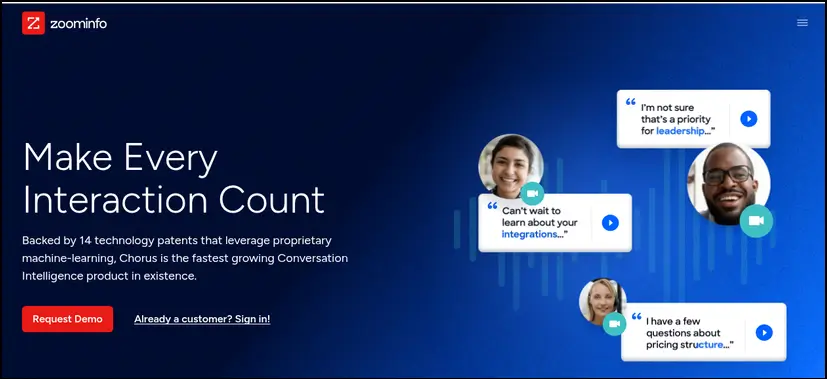
Chorus offers strong transcription accuracy and deal-risk flagging, and it’s a natural fit for teams that already run ZoomInfo for prospecting and intent data. ZoomInfo has been folding Chorus into its broader Copilot roadmap, which means the product’s direction is increasingly tied to the wider ZoomInfo suite rather than standing alone as a dedicated coaching tool.
For teams already paying for ZoomInfo, that consolidation can be a convenience. For teams evaluating conversation intelligence on its own merits, it’s worth asking whether you want a standalone platform or one that’s steadily becoming a feature of a larger suite.
Either way, streamlining CRM and sales workflows for growing teams matters more than which suite a tool happens to live in, and that’s the question worth answering before you sign.
5. Clari Copilot: Real-Time Deal Coaching and Follow-Up Engine
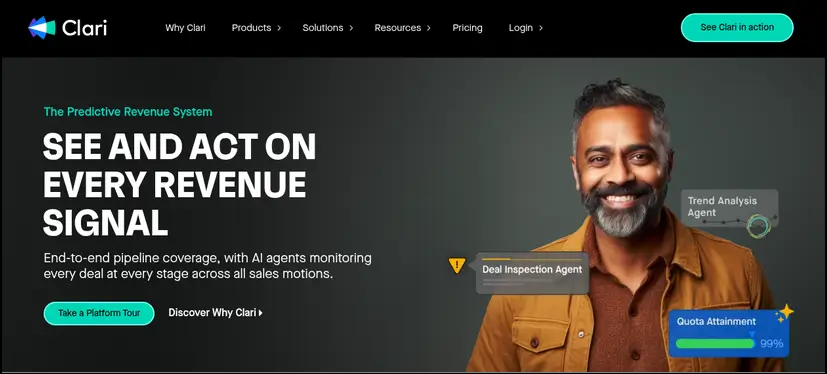
Clari Copilot leans hardest into real-time, in-call coaching, surfacing competitor mentions, pricing objections, and talk-time ratios as the conversation happens rather than after the fact. Its tie-in to Clari’s broader revenue platform means deal-health scoring and coaching data live in the same place.
The 2025 merger between Clari and Salesloft adds a layer worth watching. Combining a revenue intelligence platform with a sales engagement tool could deepen the product over time, but it also means the roadmap and pricing may shift as that integration matures.
6. Jiminny: Coaching-Focused Conversation Intelligence for Growing Teams
Jiminny is built around coaching rather than enterprise-scale analytics, with scorecards, talk-time tracking, and keyword tagging designed to help managers develop reps rather than audit them. It’s a genuinely easy platform to onboard, making it a reasonable pick for smaller sales orgs without a dedicated enablement team.
It doesn’t offer the depth of pre-meeting prep or CRM automation that larger platforms provide. Teams that need CRM systems to strengthen customer relationships at scale, rather than just track call quality, will likely outgrow Jiminny faster than the other tools on this list.
7. Zoom Revenue Accelerator: Conversation Intelligence Built Into Your Video Platform
For teams already standardized on Zoom for meetings, Revenue Accelerator offers a low-friction way to add deal insight and coaching without introducing a separate recording tool. It captures conversation data natively inside the platform reps already use and surfaces basic risk and sentiment flags with minimal setup.
Its limitation is scope. Revenue Accelerator is a feature of Zoom’s broader platform rather than a dedicated revenue execution system, so teams that need deep CRM automation or pre-meeting account intelligence will find it thinner than purpose-built alternatives.
Still, as the conversation intelligence software market keeps expanding, expect Zoom to keep investing here. Our piece on keeping your team organized with the right business tools covers how to make that kind of platform decision without adding tool sprawl.
Choosing the Right Fit for Your Team
Enterprise analytics platforms such as Gong and Chorus by ZoomInfo remain strong choices for large revenue organizations that need deep post-call review and forecasting benchmarks. If your team already runs on ZoomInfo, or has a dedicated RevOps function, either one will serve you well.
Sales teams that want the full meeting lifecycle handled automatically, rather than piecing together a recorder, a separate coaching tool, and a manual CRM update step, should start with a platform built for that from the ground up.
Cirrus Insight’s before, during, and after approach keeps prep, coaching, and CRM execution inside Salesforce, where most managers want that work to live. McKinsey’s research on sales automation makes a similar point: automating non-customer-facing tasks such as data entry frees up meaningful capacity for reps to sell.
Adoption in this category isn’t slowing down. AI-powered speech analytics adoption has grown by 48% and cloud-based deployment by 44%, according to the 2026 SNS Insider market report cited earlier. That momentum shows no sign of leveling off heading into 2027.
Teams that pick a tool now, rather than waiting for the category to settle, will have a head start on the pipeline hygiene problem their competitors are still solving by hand.