
How MSP Recruitment Solutions Help Project Managers Beat the 2026 Talent Shortage

Every project manager knows the feeling. The project got approved. The budget cleared. The timeline is set. But you can’t find the people actually to do the work. In 2026, that problem is worse than it’s been in years.
The IT talent market is tight. Leaders in cybersecurity and cloud report fill times stretching past six months. When hiring stalls, projects stall. Deadlines slip. Budgets bloat. And the pressure lands on one person: you.
That’s where MSP recruitment solutions come into play. Managed Service Provider staffing models let project leaders skip the slow hiring cycle and tap into pre-vetted talent pools.
This article covers six ways MSP recruitment helps PMs keep projects staffed, on schedule, and under budget.
What Is MSP Recruitment?
MSP recruitment is a staffing model in which a Managed Service Provider (MSP) helps organizations source, screen, and place talent for project-based or ongoing operational needs. Instead of relying only on traditional hiring, companies gain access to established talent networks, standardized recruitment processes, and pre-vetted candidates who can often be deployed much faster than through internal hiring alone.
In the project management context, MSP recruitment is especially valuable when timelines are tight and technical roles are difficult to fill. Rather than spending months opening requisitions, reviewing resumes, coordinating interviews, and waiting through notice periods, PMs can work through an MSP partner that already maintains pipelines of qualified specialists in areas like cloud, cybersecurity, infrastructure, data, and AI.
In practice, MSP recruitment provides a more structured approach to managing workforce planning, supplier coordination, candidate quality, compliance, and speed-to-hire across multiple positions. That makes it useful not only for enterprise procurement teams, but also for project leaders who need reliable staffing to keep delivery on track.
Unlike conventional recruiting, which often focuses on one role at a time, MSP recruitment is built around repeatable hiring workflows and scalable talent access. This is why it has become a practical solution for organizations facing persistent shortages of high-demand IT skills.
For PMs, the benefits are simple: faster access to the right people, reduced staffing risk, and fewer project delays caused by hiring bottlenecks.
1. The IT Talent Crunch Is a PM Problem. Why Hiring Delays Ruin Project Timelines
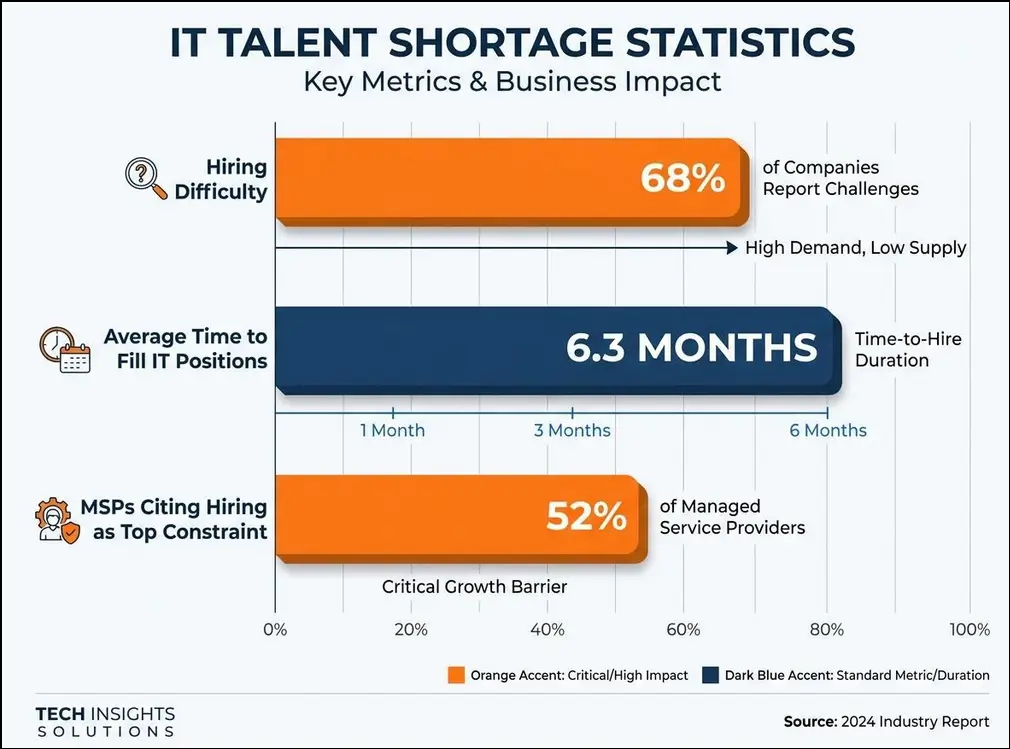
Project managers feel the talent shortage acutely. Longer fill times mean delayed milestones and blown budgets.
When you can’t hire, you can’t deliver. That’s the reality for IT leaders in 2026. According to Kaseya’s 2026 State of the MSP Report, 68% of IT leaders report difficulty recruiting cloud and cybersecurity talent. The average time to fill a cybersecurity role now sits at 6.3 months. Think about what that means for a project with a 12-month delivery window. You’d spend half the timeline just trying to staff the team.
The same report found that 52% of MSPs identify hiring as their primary growth constraint in 2026, up from just 9% the prior year. Across the broader market, Mordor Intelligence estimates the IT staffing market will reach $123.30 billion in 2025, growing at a 3.66% CAGR to $147.58 billion by 2030.
This is where MSP recruitment solutions become a practical answer for project-driven organizations. Instead of fighting through months-long recruitment cycles, project managers can tap into MSP networks that maintain pre-screened technical talent ready for deployment. For PMs working under hard deadlines, speed matters when quarterly delivery dates are fixed.
If you’re managing outsourced technical work, vendor quality makes or breaks delivery. Following best practices for outsourcing IT projects means treating your talent partner as a core part of your delivery chain, not an afterthought.
2. How MSP Recruitment Solutions Reduce Time-to-Hire from Months-long Searches to Two-week Placements
MSP-managed talent pools can cut time-to-fill from months to weeks for critical project roles.
Traditional hiring moves slowly. Post the job. Screen resumes. Conduct interviews. Wait for notice periods. For high-demand IT roles, that process can easily stretch three to four months.
MSP recruitment flips the model. Instead of sourcing candidates one at a time, MSPs maintain pre-vetted talent pools ready for deployment. Standard delivery targets for common IT roles fall around 15 business days. For project managers who need a senior cloud engineer or a security architect next quarter, that speed matters a lot.
Mature MSP programs that use AI-enhanced screening can cut time-to-hire by 25% to 50%. The technology doesn’t replace recruiters. It helps them surface the right candidates faster. That means project managers get qualified people sooner.
3. Skills-based Hiring Reduces Project Risk. Fewer Bad Hires Means Fewer Blown Deadlines
Hiring the wrong person for a project role costs more than just salary. It costs time. Rework. Team morale. And sometimes the project itself.
Skills-based hiring helps avoid that.
According to Staffing Industry Analysts, 75% of companies now use role-specific skills tests in their hiring process. And 82% of employers report satisfaction with skills-based hiring compared to 73% using traditional methods. Those figures come from an August 2025 SIA report on MSP workforce trends, which suggests that testing candidates’ actual skills produces better outcomes than relying on resumes alone.
MSP recruitment platforms increasingly embed skills assessments into their screening pipelines. Instead of sending a candidate with a polished resume and no relevant experience, the MSP can show you someone who has already passed practical tests for the specific technologies you need. For project managers, that means fewer bad hires and fewer mid-project staffing pivots.
Building the right team starts with how you evaluate talent. This guide on building the right project team covers what complex projects in 2026 teach about getting the mix right.
4. Retention: The Hidden KPI that Makes or Breaks Project Timelines. Why Keeping Talent Matters as Much as Finding It
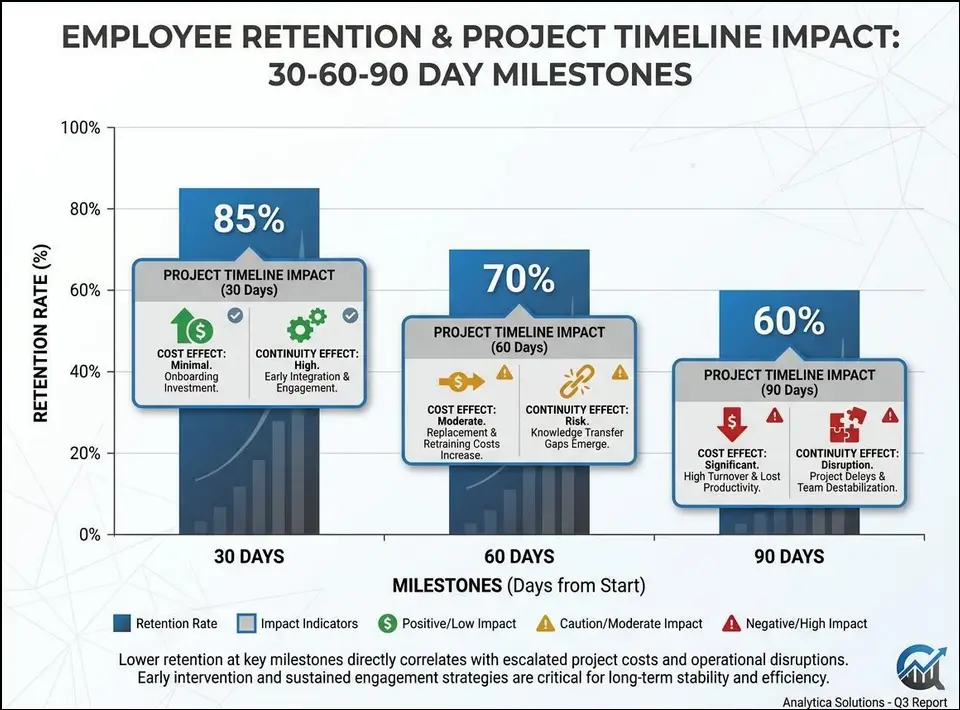
High turnover means projects constantly restart with new people. Retention directly affects continuity and cost.
Getting someone on the project is only half the battle. Keeping them there is where many MSP arrangements fall apart. According to Kaseya’s 2026 report, MSP technician turnover rates range from 18% to 22% annually. That means for every five people you staff, one will leave within the year.
For a project manager, turnover is expensive.
Every departure means a new ramp-up period. Knowledge walks out the door. New people need to learn the project context from scratch. Top MSP programs target 80%+ retention at 90 days, which signals a solid initial match. They achieve this through better matching processes, career pathing for contractors, and well-being clauses in contracts.
When evaluating an MSP partner, ask about their retention rates. A partner with strong retention will cost you less in the long run than one who cycles through talent every few months.
5. Hybrid MSP Models Give PMs More Flexibility. Matching Sourcing Strategy to Role Criticality
Not all roles are created equal. A junior help desk technician and a senior cloud architect require completely different sourcing strategies. Yet many MSP programs treat them the same way.
The 2026 standard is the hybrid model. For commodity roles like help desk and field support, a vendor-neutral MSP model works well. It keeps pricing competitive and fill times fast.
- For specialist roles in cybersecurity, cloud architecture, or AI engineering, a master vendor model is more effective. The master vendor invests deeper in a smaller pool of candidates and can access talent that generalist agencies miss.
- For project managers, this flexibility matters. You don’t want to wait six months for a senior security engineer because your MSP uses a generic sourcing process. A hybrid model lets you match the sourcing strategy to the role.
If you’re building an outsourcing strategy from scratch, the CIO’s guide to IT outsourcing provides a solid framework for thinking through vendor models and governance structures.
6. AI and Automation are Reshaping the Workforce. How Smart Tools Change the Hiring Game
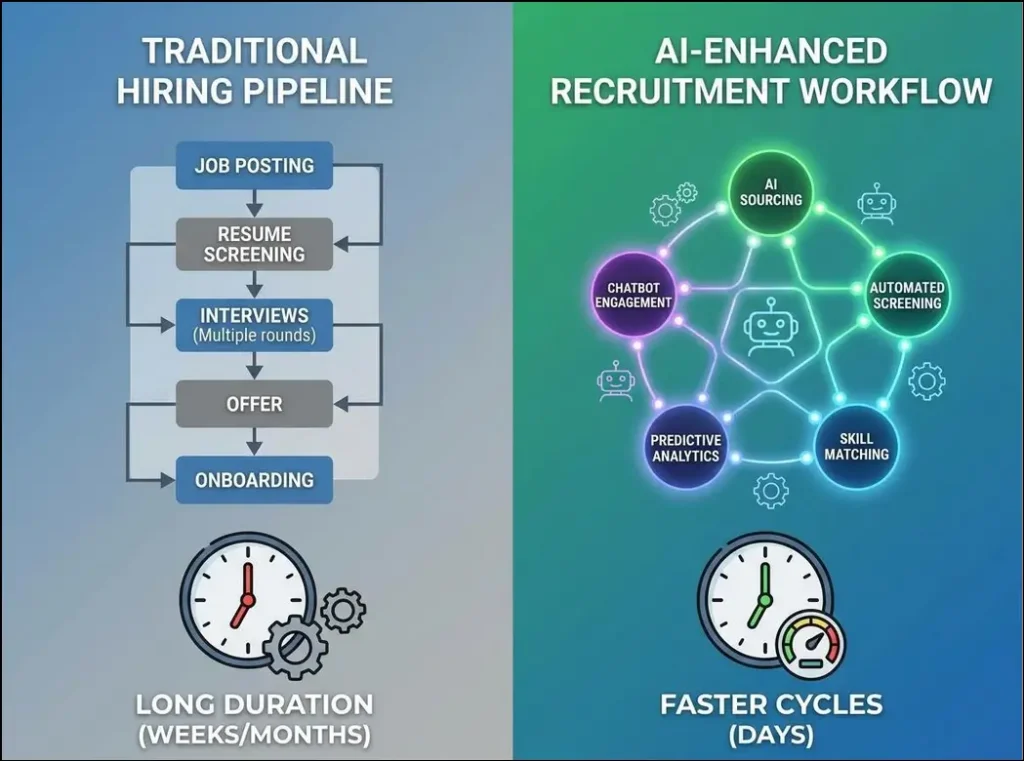
AI-powered MSP recruitment tools can reduce time-to-hire significantly in mature deployments.
The workforce is changing, and MSP recruitment is changing along with it. According to Gartner’s July 2025 Labor Market Trends Report, 91% of HR leaders say their talent strategy must address both the human and machine workforces within 3 years. That represents a major shift in how companies think about staffing.
Kaseya’s data confirms that 63% of MSPs are investing in automation, and 53% already use AI for ticketing and monitoring. Meanwhile, Mordor Intelligence reports that 14% of global tech job postings now require AI or machine learning skills, up from 9% the prior year. Generative AI engineering roles are projected to grow at an 11.75% CAGR through 2031.
Project managers need to staff for a world where AI skills are becoming table stakes. MSP recruitment solutions that source AI-skilled talent will have a clear advantage. The Gartner report makes one thing clear: the workforce of 2027 will not look like the workforce of 2025. PMs who plan for that now will be ahead of the curve.
Conclusion
The 2026 talent market is not getting easier. Fill times are long. Competition for skilled people is fierce. Turnover eats into project budgets. But MSP recruitment solutions give project managers a real way to fight back.
The teams that staff fastest, match skills most precisely, and retain talent longest will deliver their projects on time and under budget. That’s not just a recruiting goal. It’s a project management strategy. Treat your talent partner the same way you treat any critical vendor. Evaluate them on speed, quality, and reliability. The right MSP partnership can turn your biggest bottleneck into your strongest advantage.